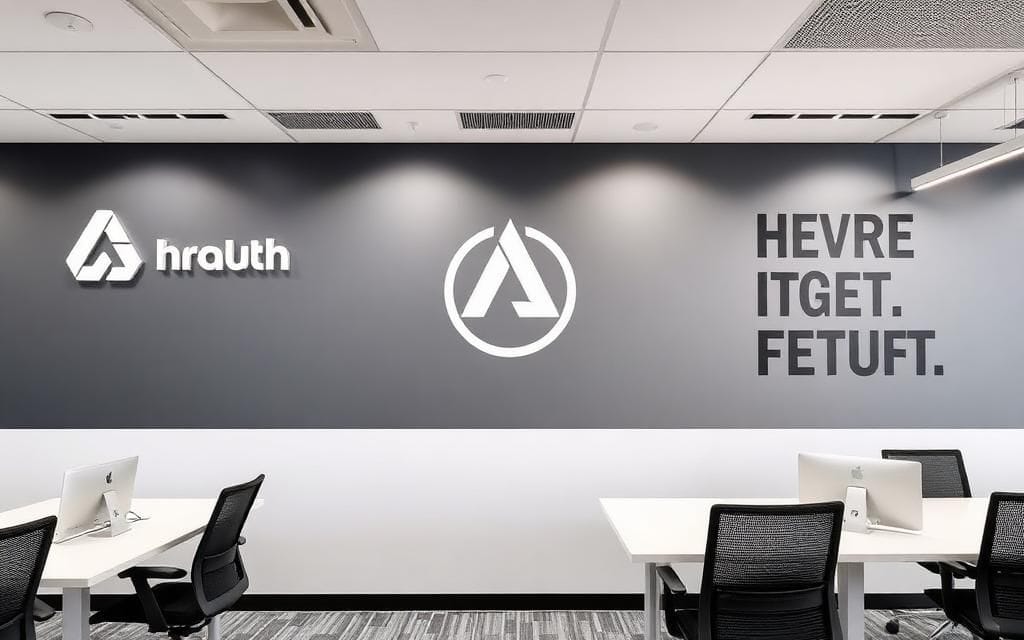
How Office Branding Influences Workplace Culture
Office branding is often viewed as a visual exercise: putting a company logo on a wall, adding branded colours to a reception area, or installing graphics on glass partitions. But effective office branding goes much further. It shapes how employees experience their workplace, how visitors perceive the company, and how consistently a business communicates its identity.
In today’s competitive business environment, workplaces are no longer simply places where employees sit and complete tasks. Offices have become environments for collaboration, creativity, communication, recruitment, client meetings, employee engagement, and brand storytelling. Every physical element—from reception signage and wall graphics to meeting-room names, glass branding, wayfinding, and environmental graphics—can contribute to the culture a company wants to build.
For businesses in Dubai and across the UAE, this is particularly important. Modern offices range from compact startup spaces and co-working environments to corporate headquarters, hospitality offices, creative studios, healthcare facilities, educational institutions, and large multinational workplaces. Each environment needs to communicate something different.
A technology company may want an innovative and energetic atmosphere. A financial organization may prefer a more professional and established environment. A creative agency may use bold graphics and unconventional installations to encourage imagination. A healthcare organization may prioritize calmness, clarity, trust, and accessibility.
This is where strategic office branding becomes valuable.
At Print & Pack, we work with brands across Dubai and the wider UAE to deliver printing, packaging, and branded experiences that make a measurable difference. In this article, we share practical insights on how office branding influences workplace culture—what to consider, what to avoid, and how to get the most value from your investment.
What Is Office Branding?
Office branding is the process of incorporating a company’s identity, values, messaging, visual language, and culture into its physical workplace.
It can include much more than a logo. A complete office branding strategy may involve:
- Reception branding
- Wall graphics
- Glass partition branding
- Frosted window films
- Office signage
- Wayfinding systems
- Meeting-room graphics
- Motivational statements
- Brand story walls
- Company timeline displays
- Mission and values graphics
- 3D logos
- Acrylic lettering
- Illuminated signage
- Printed murals
- Floor graphics
- Door graphics
- Privacy films
- Directional signs
- Employee recognition walls
- Branded reception counters
- Office furniture graphics
- Digital displays
- Corporate identity elements
The purpose is not to decorate every available surface.
The purpose is to create a workplace where the physical environment supports the company’s identity and the experience it wants employees and visitors to have.
When thoughtfully planned, office branding can reinforce a company’s values every day without requiring employees to consciously think about it.
Why Office Branding Matters for Workplace Culture
Workplace culture is influenced by leadership, communication, policies, management practices, employee relationships, recognition, working conditions, and many other factors.
Office branding cannot create a healthy culture on its own.
However, it can reinforce and communicate an existing culture.
A workplace that says “collaboration” but consists entirely of isolated, anonymous spaces sends a different message from one that visually and physically encourages teamwork.
Similarly, a company that claims innovation as a core value but operates in a visually outdated and inflexible environment may create a disconnect between its stated identity and employee experience.
Strategic office branding helps close that gap.
Branding Makes Company Values Visible
Values such as:
- Innovation
- Integrity
- Collaboration
- Sustainability
- Customer focus
- Excellence
- Inclusion
- Creativity
- Accountability
can feel abstract when they exist only in an employee handbook.
Environmental branding gives those values a physical presence.
A company might use a timeline showing major milestones, a collaborative wall displaying employee ideas, or carefully designed graphics communicating its mission.
The objective is not to cover the walls with slogans.
The objective is to create meaningful visual reminders that support the company’s culture.
The Connection Between Physical Environment and Employee Experience
Employees spend a significant amount of their working lives inside offices.
The physical environment therefore influences how they experience their employer.
A thoughtfully designed environment can communicate:
“We care about quality.”
“We know who we are.”
“We value our people.”
“We pay attention to detail.”
“We are proud of what we do.”
These messages are communicated without a meeting, presentation, or email.
Conversely, an environment that feels neglected, inconsistent, confusing, or disconnected from the company can send an unintended message.
Office branding is therefore part of the broader employee experience.
1. Office Branding Creates a Sense of Belonging
One of the most important ways branding influences workplace culture is through belonging.
Employees want to feel that they are part of something meaningful. A physical environment that reflects the company’s identity can help reinforce that feeling.
For example, an office might display:
- Company milestones
- Team achievements
- Employee contributions
- Customer success stories
- Brand values
- Community initiatives
- Sustainability projects
- Company history
- Cultural elements
These displays can make the workplace feel less generic.
Instead of walking into an anonymous office, employees enter a space that represents their organization.
Why Belonging Matters
A strong sense of belonging can support:
- Employee engagement
- Team identity
- Organizational pride
- Collaboration
- Brand alignment
- Employee retention
- Workplace connection
Again, branding is not a substitute for good management or employee support. It is one physical component of a much larger culture-building strategy.
2. Office Branding Reinforces Brand Identity
Brand identity is often discussed in terms of websites, advertisements, packaging, business cards, social media, and marketing campaigns.
But employees also experience the brand physically.
An office should ideally feel like an extension of the brand.
This means using consistent:
- Colours
- Typography
- Logos
- Photography
- Icons
- Materials
- Messaging
- Signage styles
- Graphic treatments
When these elements are applied consistently, employees receive a stronger sense of brand continuity.
A customer visiting the office should be able to recognize the same brand personality they see online.
Employees should experience the same consistency.
This is particularly important for businesses with multiple locations.
3. Office Branding Supports Employee Engagement
Employee engagement is influenced by many factors, but the workplace environment can play an important supporting role.
An engaging office does not necessarily mean a colourful office.
It means an environment that feels intentional.
For example, a company could use:
- Interactive walls
- Employee recognition displays
- Creative meeting-room graphics
- Project showcase walls
- Writable collaboration areas
- Branded innovation boards
- Digital information screens
- Company achievement displays
These elements can encourage employees to interact with their environment.
Instead of treating walls as empty surfaces, businesses can turn them into communication tools.
4. Office Branding Can Improve Internal Communication
Not every branding element needs to promote the company.
Some can communicate useful internal information.
Wayfinding is one example.
Clear signage can help employees and visitors understand:
- Where reception is located
- Which rooms are meeting spaces
- Where departments are located
- Where facilities are available
- Which areas are restricted
- How to navigate multiple floors
Good wayfinding reduces confusion.
This is particularly important in large offices, corporate towers, campuses, hospitals, educational institutions, and multi-floor workplaces.
5. Office Branding Helps New Employees Understand the Company
Onboarding is an important stage in the employee lifecycle.
New employees are learning:
- What the company does
- How teams work
- What the organization values
- Who its customers are
- What its history is
- How employees are expected to collaborate
A well-branded office can reinforce this learning process.
A company history wall, for example, can communicate organizational milestones.
A values wall can introduce cultural principles.
A project showcase can demonstrate the company’s work.
A branded collaboration area can communicate that teamwork is important.
These visual cues can complement formal onboarding rather than replacing it.
6. Reception Branding Sets the Tone
Reception is often the first physical touchpoint for employees, candidates, customers, suppliers, and visitors.
It should therefore communicate the right message immediately.
Reception branding may include:
- 3D logo signs
- Acrylic lettering
- Backlit logos
- Metal letters
- Feature walls
- Brand-colour graphics
- Digital displays
- Company mission statements
- Architectural finishes
A minimal corporate reception may use a clean dimensional logo on a premium wall.
A creative company may use a bold illustrated feature wall.
A luxury business may choose metal lettering, stone finishes, or subtle illumination.
The right approach depends on the brand.
7. Glass Branding Combines Privacy and Identity
Glass partitions are common in modern Dubai offices.
They provide openness and natural light, but they can also create privacy challenges.
Branded glass films offer a practical solution.
Options include:
- Frosted vinyl
- Cut vinyl
- Printed frosted film
- Decorative patterns
- Gradient privacy films
- Logo films
- Full-height graphics
- Manifestation bands
A company can use frosted graphics to create privacy while incorporating its visual identity.
This is an example of branding serving both aesthetic and functional purposes.
8. Wall Branding Turns Empty Space Into Communication
Walls represent a large opportunity for workplace branding.
Instead of leaving large surfaces blank, companies can use them strategically.
Possible applications include:
Brand Story Walls
A brand story wall can explain:
- Where the company started
- Key milestones
- Major achievements
- Expansion
- Important projects
- Corporate values
Mission Walls
A mission statement can be displayed in a carefully designed format.
Employee Recognition Walls
Teams and individual achievements can be celebrated through branded displays.
Creative Murals
Illustrated murals can make offices more distinctive and visually engaging.
Product or Service Walls
Businesses can explain their products or services through infographics and visuals.
The important consideration is relevance.
Every wall does not need a message.
9. Wayfinding Supports a More Organized Workplace
Wayfinding is often overlooked because it appears purely functional.
But good wayfinding contributes to workplace culture by making an environment easier to understand.
A visitor who can easily find a meeting room feels more confident.
An employee who can navigate a large office without confusion experiences less friction.
A new employee can become familiar with the workplace more quickly.
Good wayfinding should therefore balance:
- Visibility
- Readability
- Brand consistency
- Accessibility
- Placement
- Contrast
- Simplicity
The best wayfinding signs communicate information quickly.
10. Meeting Room Branding Can Influence Collaboration
Meeting rooms are important spaces for workplace culture.
Businesses can use names, graphics, colours, and visual themes to make meeting spaces more distinctive.
Instead of simply numbering rooms “Meeting Room 1” and “Meeting Room 2,” businesses may use names connected to:
- Company locations
- Company values
- Products
- Historical milestones
- Local landmarks
- Industry terminology
- Company founders
- Brand concepts
The objective is to create an environment that feels connected to the organization.
11. Office Branding Can Support Different Workplace Zones
Modern offices often contain different types of spaces.
These may include:
- Focus areas
- Collaboration areas
- Meeting rooms
- Breakout spaces
- Reception
- Cafeterias
- Lounges
- Training rooms
- Executive offices
- Creative studios
Branding can help distinguish these areas.
For example, collaboration zones might use energetic graphics, while quiet areas could use calmer visual treatments.
The result is a workplace where branding supports spatial function.
12. Branding Can Make Hybrid Workplaces Feel More Connected
Hybrid work has changed how many organizations think about offices.
Employees may spend only part of their week physically present.
This makes the office experience more important.
When employees return to an office, they should experience a space that feels purposeful.
Branded environments can reinforce organizational identity and create a sense of connection that digital platforms cannot fully replicate.
An office can become a place where employees:
- Meet
- Collaborate
- Celebrate
- Learn
- Create
- Connect with leadership
- Interact with customers
Office branding can support this transformation by making physical environments more intentional.
Office Branding and Employee Morale
Employee morale is influenced by recognition, leadership, workload, compensation, career development, relationships, and workplace conditions.
Visual environment is only one factor.
However, a well-maintained and thoughtfully branded office can contribute to a sense of pride.
Consider the difference between:
A neglected wall with peeling graphics and outdated signage and
A clean, professionally produced environment with consistent branding and well-maintained graphics.
The second environment communicates attention to detail.
That can influence how employees perceive the organization.
Recognition Walls and Employee Achievement
Employee recognition is a powerful cultural tool.
A company might create a branded recognition area for:
- Employee of the month
- Project achievements
- Years of service
- Customer success
- Innovation awards
- Team accomplishments
These displays should be updated regularly.
An outdated recognition wall can have the opposite effect.
The principle is simple:
If branding communicates culture, it must be maintained to remain credible.
Office Branding and Recruitment
The workplace is increasingly part of the employer brand.
Candidates may visit an office during:
- Interviews
- Assessments
- Orientation
- Meetings
- Tours
The physical environment can influence their perception of the company.
A thoughtful workplace can communicate:
- Professionalism
- Creativity
- Stability
- Innovation
- Employee focus
- Organizational maturity
This does not mean a company needs an expensive office.
A smaller office can still use strategic branding to communicate its identity effectively.
The objective should be authenticity rather than unnecessary extravagance.
Office Branding and Client Perception
Office branding also affects external stakeholders.
When customers or partners visit your workplace, they experience your brand physically.
A well-branded reception area can create a strong first impression.
Consistent signage helps the business appear organized.
Professional wall graphics can communicate expertise.
A well-designed meeting room can reinforce corporate identity.
The key is consistency.
If the company website communicates premium quality but the physical office looks neglected, customers may notice the disconnect.
Office Branding Agency Dubai: What Should Businesses Look For?
Businesses considering an Office Branding Agency Dubai should look beyond the ability to print graphics.
Office branding involves multiple disciplines.
A capable partner should understand:
- Graphic design
- Print production
- Materials
- Signage
- Installation
- Surface preparation
- Colour management
- Environmental considerations
- Project planning
- Safety
- Site coordination
- Brand guidelines
The best results come from a partner that can manage the project as an integrated branding exercise.
Design Consultation
Before production begins, the team should understand:
- Business objectives
- Target audience
- Brand guidelines
- Office layout
- Employee requirements
- Visitor journey
- Budget
- Timeline
Material Selection
Different applications require different materials.
For example:
- Frosted vinyl for glass
- PVC or vinyl graphics for walls
- Acrylic for dimensional logos
- Metal for premium signage
- Fabric for temporary displays
- Illuminated systems for high-impact branding
Installation
Professional installation is essential.
Even excellent graphics can look poor if:
- Surfaces are not prepared
- Graphics are misaligned
- Air bubbles remain
- Edges are poorly finished
- Signage is incorrectly mounted
Installation should therefore be considered part of the branding project rather than an afterthought.
Office Branding in Dubai: Understanding the Local Environment
Dubai presents unique considerations for branding projects.
Although indoor office environments are protected from direct weather exposure, many commercial spaces still experience:
- Strong air conditioning
- Temperature fluctuations
- High foot traffic
- Frequent cleaning
- Dust
- Glass exposure
- Intensive daily use
Exterior-facing office branding has additional considerations, including:
- UV exposure
- Heat
- Humidity
- Dust
- Wind
- Outdoor maintenance
Material selection should reflect the environment.
Businesses should also consider building management requirements and applicable approvals before installation.
The Role of Colour in Workplace Branding
Colour is one of the most recognizable elements of brand identity.
However, using brand colours everywhere is not always the best strategy.
A more sophisticated approach uses colour strategically.
For example:
- Primary brand colours can highlight key areas.
- Secondary colours can differentiate zones.
- Neutral colours can provide visual balance.
- Accent colours can draw attention to important messages.
Too much colour can create visual fatigue.
Too little can make the environment feel disconnected from the brand.
Balance is essential.
Typography and Workplace Branding
Typography is another important component.
A company should generally use fonts that align with its established identity.
However, environmental applications may require adjustments for readability.
Large wall graphics can use expressive typography.
Wayfinding should prioritize clarity.
Small room signs should be legible from an appropriate distance.
Accessibility should also be considered.
The best office branding balances brand consistency with practical communication.
Sustainable Office Branding
Sustainability is becoming increasingly important for businesses planning physical environments.
Office branding can incorporate sustainable approaches through:
- Reusable signage systems
- Recyclable materials
- Responsible printing
- Low-impact inks
- Reusable display structures
- Long-lasting materials
- Replaceable graphics
- Efficient LED systems
Sustainability should not simply be used as a marketing message.
Businesses should consider the full lifecycle of branding materials.
Can the graphic be updated without replacing the entire structure?
Can a sign be reused after an office relocation?
Can a temporary campaign be produced using recyclable or reusable materials?
These questions can reduce waste while improving long-term value.
Retail Branding in Dubai and Its Connection to Office Culture
Although office branding and retail branding serve different environments, they share many principles.
Retail Branding in Dubai focuses on creating a customer-facing environment that communicates brand identity and influences purchasing behaviour.
Office branding focuses more heavily on employees, visitors, and workplace experience.
However, both depend on:
- Consistency
- Visual storytelling
- Brand recognition
- Wayfinding
- Material quality
- Customer or employee experience
- Strategic placement
Businesses with both offices and retail locations can benefit from using a connected visual language.
For example, the same colour system, typography, logo treatment, imagery, and messaging can be adapted across:
- Corporate offices
- Retail outlets
- Showrooms
- Vehicles
- Exhibitions
- Packaging
- Promotional materials
This creates a unified brand experience.
Why Retail Branding in Dubai Requires Consistency
Dubai’s retail environment is highly competitive.
Customers encounter multiple brands within shopping centres, high streets, malls, hospitality venues, and mixed-use developments.
Effective Retail Branding in Dubai can help businesses stand out through:
- Storefront signage
- Window graphics
- Interior graphics
- Point-of-sale displays
- Product displays
- Promotional signage
- Wayfinding
- Feature walls
- Illuminated logos
When the corporate office and retail environment share consistent branding, employees can better understand how the brand appears to customers.
This creates a stronger connection between internal culture and external brand experience.
Common Office Branding Mistakes
A successful office branding project is not simply about adding more graphics.
Several mistakes can reduce its effectiveness.
Mistake 1: Branding Every Surface
More branding does not automatically mean stronger branding.
Over-branded environments can become distracting.
Use visual hierarchy.
Identify the areas where branding will have the greatest impact.
Mistake 2: Using Too Many Messages
A wall containing ten slogans may communicate less effectively than a wall containing one meaningful statement.
Keep messages concise.
Mistake 3: Ignoring the Employee Experience
Some businesses design offices entirely for visitors.
Employees use the workplace every day.
Their experience should be considered equally.
Mistake 4: Copying Another Company’s Office
An office should reflect your company’s identity.
What works for a technology startup may not work for a financial organization.
Mistake 5: Choosing Materials Only Based on Appearance
A material may look attractive but perform poorly in its intended environment.
Consider durability, cleaning, installation, maintenance, and replacement.
Mistake 6: Ignoring Maintenance
A damaged sign or faded graphic can undermine the professional appearance of the entire office.
Plan for maintenance.
Mistake 7: Failing to Request Samples
Colours, textures, finishes, and materials can look different on screen.
A physical sample is especially useful for premium installations.
How to Plan an Office Branding Project
A structured process can reduce mistakes and improve results.
Step 1: Define the Objective
Ask:
Why are we branding the office?
Possible objectives include:
- Rebranding
- Office relocation
- Employee engagement
- Client experience
- Recruitment
- Wayfinding
- Brand consistency
- Workplace modernization
Step 2: Understand the Audience
Consider:
- Employees
- Customers
- Visitors
- Candidates
- Suppliers
- Partners
- Management
Different audiences may need different visual information.
Step 3: Audit the Existing Environment
Review:
- Walls
- Glass
- Doors
- Reception
- Signage
- Corridors
- Meeting rooms
- Common areas
- External entrances
Identify opportunities and constraints.
Step 4: Create a Branding Strategy
Decide which areas require:
- Functional signage
- Brand graphics
- Decorative graphics
- Information
- Wayfinding
- Employee communication
Step 5: Select Materials
Choose materials based on:
- Surface
- Durability
- Budget
- Design
- Maintenance
- Installation
- Lifespan
Step 6: Produce Samples
Request:
- Material samples
- Colour proofs
- Print samples
- Signage prototypes
- Lighting tests
Step 7: Plan Installation
Consider:
- Working hours
- Access
- Building rules
- Surface preparation
- Furniture movement
- Safety
- Installation sequence
Step 8: Measure the Result
After installation, evaluate:
- Employee feedback
- Visitor feedback
- Brand consistency
- Wayfinding effectiveness
- Visual quality
- Maintenance requirements
Measuring the Impact of Office Branding
Branding can sometimes feel difficult to measure because its impact is not always immediate.
However, businesses can use practical indicators.
Employee Feedback
Ask employees whether the environment feels:
- More connected to the company
- More professional
- More inspiring
- Easier to navigate
- More welcoming
Visitor Feedback
Monitor how customers and partners respond to the environment.
Recruitment Experience
Ask candidates about their impression of the workplace.
Brand Consistency
Audit whether physical branding matches digital and marketing materials.
Maintenance
Track how often graphics need replacement or repair.
The goal is not to claim that a wall graphic directly causes a specific percentage increase in productivity.
Instead, businesses should evaluate whether branding supports broader workplace and brand objectives.
Office Branding for Different Business Types
Different organizations can use branding differently.
Corporate Offices
Corporate offices often benefit from:
- Reception branding
- Mission statements
- Corporate timelines
- Department signage
- Meeting-room graphics
- Wayfinding
Startups
Startups can use flexible and cost-effective branding:
- Vinyl graphics
- Wall decals
- Removable signage
- Creative murals
- Modular displays
Hotels and Hospitality Offices
Hospitality brands can use premium materials and refined visual treatments that reflect the guest experience.
Healthcare Offices
Healthcare environments should prioritize:
- Clear wayfinding
- Readability
- Calm colours
- Privacy
- Accessibility
- Professional signage
Educational Institutions
Schools and training centres can use:
- Department graphics
- Inspirational messaging
- Directional signs
- Achievement walls
- Educational murals
Creative Agencies
Creative organizations have more opportunities for:
- Custom murals
- Experimental typography
- Interactive graphics
- Bold colours
- Unique installations
Office Branding and Employee Identity
Branding can also support employees’ understanding of their role within an organization.
Department-specific graphics can help employees identify where they belong.
Branded spaces can communicate organizational structure.
Recognition displays can celebrate contributions.
Company timelines can demonstrate collective progress.
These elements can help connect individual work to the larger organization.
The Psychology of Branded Spaces
People naturally respond to visual cues.
Colour can create associations.
Typography can influence perceived personality.
Lighting can affect atmosphere.
Wayfinding can reduce uncertainty.
Materials can communicate quality.
Images can tell stories.
When these elements work together, the workplace becomes more than a physical location.
It becomes a communication environment.
The strongest office branding therefore considers not only how something looks but also what people are expected to feel, understand, and do.
Creating an Authentic Branded Workplace
Authenticity is critical.
If a company says it values collaboration, its workplace branding should ideally support collaborative behaviour.
If sustainability is important, the company can demonstrate that through responsible material selection.
If innovation is central to the brand, the environment can incorporate flexible, creative, or interactive elements.
The important thing is alignment.
Branding should reflect reality rather than attempt to disguise it.
Employees are more likely to respond positively to branding when it feels genuine.
Office Branding Should Evolve With the Company
A company’s identity may change over time.
Businesses grow.
Teams move.
Products change.
Brand identities are refreshed.
Offices are renovated.
Branding systems should therefore be designed with future changes in mind.
Modular systems can make updates easier.
Replaceable wall graphics can support campaigns.
Interchangeable signage can accommodate organizational changes.
Digital displays can allow content updates without replacing physical hardware.
Planning for change can increase the long-term value of an office branding investment.
Temporary vs Permanent Office Branding
Not every branding element needs to last for years.
Permanent Branding
Suitable for:
- Company logos
- Reception signs
- Core wayfinding
- Architectural elements
- Permanent values
Semi-Permanent Branding
Suitable for:
- Campaign graphics
- Employee programs
- Seasonal messages
- Department updates
Temporary Branding
Suitable for:
- Events
- Product launches
- Internal campaigns
- Celebrations
- Short-term initiatives
Choosing the right lifespan helps control costs.
Office Branding and Rebranding Projects
A company rebrand is one of the most obvious opportunities to reconsider the physical environment.
A logo change should not stop at the website.
Businesses should review:
- Reception signs
- Glass graphics
- Wall graphics
- Room signs
- Wayfinding
- Exterior signage
- Employee areas
- Printed materials
- Promotional displays
A coordinated physical rollout helps ensure the new identity becomes visible throughout the organization.
The Role of Prototyping
Prototyping is particularly useful for office branding.
Before producing a large wall graphic or complex signage system, a business can evaluate a sample.
This can reveal:
- Colour differences
- Scale issues
- Material suitability
- Lighting performance
- Readability
- Surface compatibility
A small investment in prototyping can help prevent larger production mistakes.
Choosing the Right Office Branding Agency Dubai
When selecting an Office Branding Agency Dubai, businesses should consider the complete project rather than just the quoted price.
Ask potential suppliers:
- Do you provide design support?
- Can you produce physical samples?
- What materials do you recommend?
- Do you handle installation?
- Can you work outside office hours?
- Can you manage large projects?
- How do you maintain colour consistency?
- Can you provide signage and printing under one project?
- What are the expected lead times?
- How will surfaces be prepared?
- What maintenance is available?
- Can you accommodate future updates?
A supplier that understands both creative and production requirements can help reduce coordination between multiple vendors.
Why In-House Production Can Add Value
An integrated supplier can potentially manage:
Design → Prototyping → Production → Finishing → Installation → Delivery
This can make project coordination easier.
It can also provide greater control over:
- Quality
- Colour
- Materials
- Timelines
- Finishing
- Installation
For large office rollouts, having one accountable project partner can be especially useful.
Office Branding and Cost Management
A successful office branding project does not need to be the most expensive option.
Value comes from selecting the right solution for each application.
For example:
A premium 3D illuminated logo may be worthwhile in reception.
A simple vinyl graphic may be more practical in a back-office corridor.
A durable sign may be appropriate for high-traffic areas.
A removable graphic may be better for a temporary campaign.
Cost management should therefore be based on strategic allocation rather than choosing the cheapest material everywhere.
Planning Office Branding at Scale
For companies with multiple branches, consistency becomes more complicated.
A brand may operate across:
- Dubai
- Abu Dhabi
- Sharjah
- Ajman
- Other UAE locations
- GCC markets
Each site may have different dimensions and building requirements.
A scalable branding system can establish:
- Approved materials
- Standard colours
- Signage specifications
- Typography
- Logo proportions
- Installation guidelines
- Graphic templates
This helps maintain brand consistency while allowing local adaptation.
Office Branding for Multinational Companies
Multinational companies may have global brand guidelines.
Local offices need to maintain these standards while adapting to regional environments.
An experienced branding partner should be able to work within existing guidelines rather than creating unnecessary variations.
This may include:
- Approved Pantone colours
- Corporate typography
- Global logo specifications
- Approved imagery
- Signage standards
- Material specifications
The result should feel like part of the global organization while still working effectively in the local environment.
The Future of Office Branding
Office branding is becoming increasingly connected to technology, flexibility, sustainability, and employee experience.
Future workplaces may combine:
- Digital signage
- Interactive displays
- Smart wayfinding
- Flexible graphics
- Sustainable materials
- Modular environments
- Data-driven workplace communication
- Integrated lighting
However, technology should support the objective rather than become the objective.
A simple, well-designed sign can be more effective than an unnecessarily complicated digital installation.
10 Key Principles for Better Office Branding
1. Start With the Purpose
Know what you want the branding to achieve.
2. Understand Your Audience
Design for employees and visitors, not just management.
3. Stay Consistent
Use established brand guidelines.
4. Avoid Overbranding
Leave enough visual space for the environment to breathe.
5. Choose Materials Carefully
Match materials to the application.
6. Think About Maintenance
Plan for cleaning, repairs, and updates.
7. Request Physical Samples
Do not rely solely on digital previews.
8. Plan for Future Changes
Use modular or replaceable systems where appropriate.
9. Coordinate With Building Requirements
Confirm installation rules and approvals before production.
10. Work With an Experienced Partner
Choose a supplier capable of managing the complete process.
Office Branding Is More Than Decoration
At Print & Pack, we approach office branding as a combination of visual identity, communication, functionality, and production quality.
Our Dubai-based team can support businesses from initial design consultation and prototyping through production, finishing, delivery, and installation across the UAE.
Our office branding capabilities can include:
- Reception branding
- 3D logo signage
- Acrylic lettering
- Metal lettering
- Frosted glass films
- Glass graphics
- Wall vinyl
- Wall murals
- Motivational graphics
- Brand story walls
- Office wayfinding
- Meeting-room signage
- Door graphics
- Floor graphics
- Feature walls
- Promotional displays
- Illuminated signage
- Custom environmental graphics
We can help businesses identify which branding applications will create the greatest impact rather than simply recommending graphics for every available surface.
Whether you are moving into a new office, refreshing an existing workplace, completing a corporate rebrand, or developing a multi-location branding program, we can help you create a consistent and professional environment.
Our Approach to Office Branding
Design Consultation
We begin by understanding your brand, objectives, workplace layout, audience, and budget.
Concept Development
Our team develops visual approaches that connect your brand identity with the physical environment.
Material Selection
We recommend materials based on appearance, durability, application, maintenance, and budget.
Prototyping
Where appropriate, we provide physical samples or proofs so you can evaluate the result before full production.
Production
Our production capabilities allow us to manufacture a range of printed graphics, signage, displays, and branding elements.
Installation
Professional installation ensures graphics and signage are accurately positioned and finished.
Delivery Across the UAE
We coordinate delivery and installation requirements for projects across Dubai and the wider UAE.
Key Considerations Before Starting an Office Branding Project
Before choosing materials or formats, define your objective and audience.
Consider what you want employees and visitors to feel, understand, or experience.
Match the finish, substrate, and production method to your brand tone and the environment.
A premium corporate office may require a different material strategy from a creative studio or temporary workspace.
Plan for scale.
A solution that works for a single office launch may need to be adapted for multiple locations or ongoing campaigns.
Always request a physical sample or proof before approving a large production run, particularly when using specialty materials, specific brand colours, or complex finishing.
Finally, partner with a supplier who can advise on durability, compliance, installation requirements, lead times, and maintenance.
What to Avoid When Branding Your Office
The most effective workplace environments are usually intentional rather than excessive.
Avoid:
- Too many slogans
- Unnecessary graphics
- Inconsistent colours
- Low-quality materials
- Difficult-to-read signage
- Poorly positioned logos
- Outdated employee information
- Ignoring building regulations
- Choosing materials without considering durability
- Treating installation as an afterthought
Good branding is not about making every wall visually busy.
It is about making the right areas meaningful.
A Practical Office Branding Checklist
Before production, ask:
Brand
- Does the design reflect our current identity?
- Are colours and fonts consistent?
- Is the logo used correctly?
Culture
- Does the environment reflect our values?
- Does it feel authentic to employees?
- Does it support the type of workplace we want to create?
Function
- Can visitors navigate easily?
- Are important messages readable?
- Are signs positioned appropriately?
Materials
- Are the materials suitable for the surface?
- Are they durable enough?
- Are they easy to maintain?
Production
- Have we reviewed a sample?
- Are dimensions confirmed?
- Has artwork been approved?
Installation
- Has the building manager approved the installation?
- Is access available?
- Are working hours confirmed?
- Is the installation area prepared?
Future
- Can elements be updated?
- Can graphics be replaced?
- Will the system work if we expand?
The most effective office branding does not simply make a workplace look attractive.
It communicates.
It communicates who the company is, what it values, how it wants customers to feel, and how employees fit into the larger organization.
Walls can tell a company’s story.
Reception areas can create a strong first impression.
Glass branding can combine privacy with identity.
Wayfinding can reduce confusion.
Meeting-room graphics can reinforce collaboration.
Recognition displays can celebrate employees.
Illuminated logos can create memorable brand touchpoints.
When these elements are planned as part of a larger strategy, office branding can become an important supporting component of workplace culture.
For businesses considering an Office Branding Agency Dubai, the priority should be finding a partner that understands the relationship between brand identity, workplace experience, materials, production, and installation.
At the same time, businesses operating customer-facing locations should think beyond the office. Retail Branding in Dubai can create a consistent connection between the employee experience and the customer experience, ensuring that the same brand identity appears across offices, stores, showrooms, events, vehicles, packaging, and other physical touchpoints.
Ultimately, the goal is not to make an office look branded.
The goal is to make the workplace feel like the brand.
“Great branding isn’t just about what people see. It’s about how the environment makes them feel, what it helps them remember, and how it connects them to the brand.”
FAQ
1. How does office branding influence workplace culture?
Office branding can reinforce company values, strengthen a sense of belonging, support communication, improve wayfinding, and create a more consistent employee experience. It works best when the physical environment genuinely reflects the organization’s culture rather than simply displaying decorative graphics.
2. What is included in office branding?
Office branding can include reception signage, wall graphics, glass films, 3D logos, meeting-room signs, wayfinding, feature walls, company timelines, motivational graphics, employee recognition displays, floor graphics, illuminated signage, and other environmental branding elements.
3. Can office branding improve employee morale?
A well-designed and maintained workplace can contribute to employee pride and a stronger sense of belonging. However, office branding is one part of the overall employee experience and should complement strong leadership, communication, recognition, and working conditions.
4. How do I choose an Office Branding Agency Dubai?
Look for an Office Branding Agency Dubai that can provide design consultation, material recommendations, prototyping, production, finishing, installation, and project management. Experience with commercial environments and the ability to work within brand guidelines are also important.
5. What is the difference between office branding and retail branding?
Office branding primarily focuses on employees, visitors, workplace identity, and internal culture, while retail branding focuses heavily on customer experience, product visibility, store identity, and purchasing environments. Both use signage, graphics, materials, colour, and spatial communication to strengthen brand identity.
6. Why is Retail Branding in Dubai important?
Retail Branding in Dubai helps businesses create recognizable and consistent customer-facing environments in a competitive retail market. Storefront signage, window graphics, interior branding, point-of-sale displays, and feature walls can help businesses create stronger visual identities and memorable shopping experiences.
7. Is wall branding suitable for corporate offices?
Yes. Wall branding can be used for company values, mission statements, brand stories, employee achievements, project displays, feature walls, and decorative graphics. The design should be appropriate for the company’s identity and the function of the space.
8. What type of glass branding is suitable for offices?
Frosted vinyl, printed privacy films, cut vinyl logos, decorative films, and custom glass graphics are commonly suitable for offices. The appropriate option depends on the required level of privacy, design, glass surface, lighting, and intended lifespan.
9. Should businesses request samples before office branding production?
Yes. Physical samples can help businesses evaluate actual colours, materials, textures, finishes, scale, and print quality before approving large production quantities. Samples are particularly useful for premium signage and projects involving multiple materials.
10. Can office branding be updated as company culture changes?
Yes. Businesses can use modular, removable, or replaceable graphics to make future updates easier. Permanent elements such as reception signage can remain consistent while temporary campaigns, employee displays, promotional graphics, and internal communication areas can be refreshed as needed.
Professional Office & Retail Branding Solutions
At Print & Pack, we help businesses across Dubai and the wider UAE turn workplaces, retail spaces, and commercial environments into cohesive branded experiences.
From design consultation and prototyping to production, finishing, delivery, and installation, our team can manage the complete process under one roof.
Whether you need a single branded reception wall, complete Office Branding, a multi-location workplace rollout, or Retail Branding in Dubai, we can recommend the right materials, finishes, formats, and production methods for your requirements.
Choose branding that looks professional, communicates clearly, supports your culture, and delivers long-term value. Contact Print & Pack today for a consultation and discover professional branding solutions designed to keep your business on-brand, on-budget, and ready for growth.