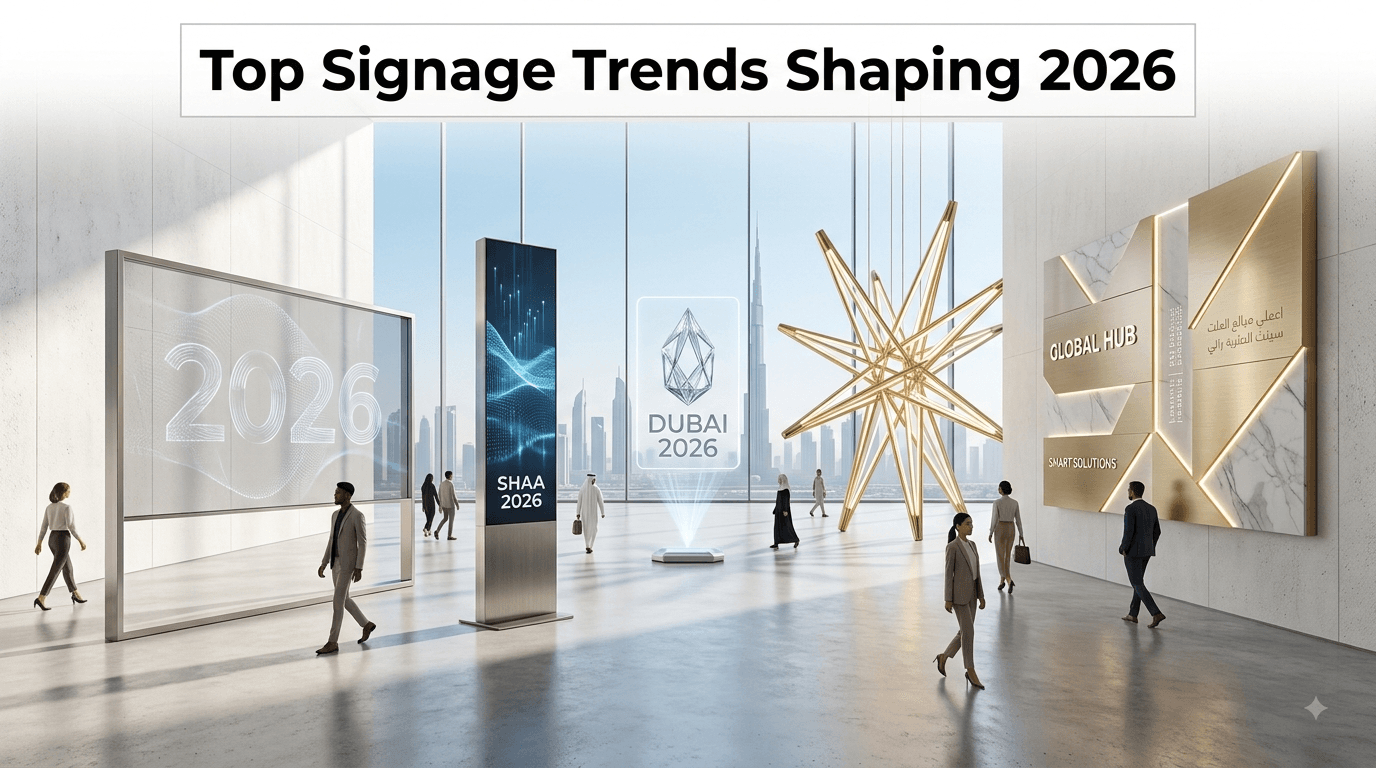
Top Signage Trends Shaping 2026
Signage is no longer simply a way to display a business name or provide directions. In 2026, signage in Dubai is becoming an important part of brand identity, customer experience, workplace design, and digital engagement. From illuminated 3D letters and intelligent digital displays to sustainable materials and experiential wayfinding, the Top Signage Trends Shaping 2026 are changing how businesses present themselves in retail stores, offices, hotels, restaurants, shopping centres, exhibitions, and commercial developments.
For businesses in Dubai and across the UAE, choosing the right signage is particularly important. A well-designed sign must look impressive while also performing in a demanding environment. Heat, UV exposure, dust, humidity, high footfall, changing campaigns, and local regulations all need to be considered when selecting materials, lighting, fabrication methods, and installation techniques.
The Top Signage Trends Shaping 2026 are therefore not simply about following visual trends. They are about creating signage that communicates clearly, reinforces brand recognition, improves customer experience, and delivers long-term value.
Why Signage Trends Matter in 2026
Modern customers interact with brands across multiple physical and digital touchpoints. Your storefront, reception area, office entrance, wayfinding system, exhibition stand, and interior graphics all contribute to how people perceive your business.
In Dubai’s competitive retail and commercial environment, distinctive signage can help a business stand out from surrounding brands. For offices, thoughtful signage can create a more professional workplace while helping employees and visitors navigate the building. For hospitality and retail businesses, illuminated and experiential signage can create memorable spaces that encourage customers to interact with the brand.
The Top Signage Trends Shaping 2026 reflect this shift toward signage that is more visually distinctive, sustainable, interactive, adaptable, and closely connected to the overall customer experience.
1. Illuminated 3D and Dimensional Signage
One of the strongest trends in 2026 is the continued popularity of three-dimensional signage. Flat printed signs are being complemented by dimensional letters, channel letters, acrylic logos, metal lettering, and illuminated 3D displays.
Businesses are increasingly using depth and lighting to make their logos more prominent from different viewing angles. Halo-lit letters create a sophisticated glow around the edges of a logo, while front-lit channel letters provide strong visibility from a distance.
For premium offices, hotels, retail stores, restaurants, and showrooms, 3D illuminated signage can create a high-end visual identity without requiring excessive graphics.
Popular options include:
- 3D channel letters
- Halo-lit letters
- Front-lit acrylic letters
- Backlit stainless-steel lettering
- Edge-lit acrylic signs
- Push-through illuminated letters
- Custom illuminated logos
The key advantage is visibility. A well-designed illuminated sign can communicate your brand both during the day and after dark.
2. Smart and Interactive Digital Signage
Digital signage continues to evolve as businesses look for more flexible ways to communicate with customers.
Unlike traditional static signs, digital displays can change content without physically replacing the sign. Retailers can promote different products throughout the day, restaurants can update menus, offices can display announcements, and hotels can provide event information through digital screens.
Interactive signage takes this further by allowing customers to engage directly with content. Touchscreens, QR codes, motion-sensitive displays, interactive directories, and digital wayfinding systems are increasingly becoming part of modern commercial environments.
For businesses managing frequent promotions, events, or product launches, digital signage can provide greater flexibility than permanent printed graphics.
3. Sustainable and Eco-Friendly Signage
Sustainability is becoming an increasingly important consideration when businesses plan signage projects.
The demand for environmentally responsible materials is encouraging signage manufacturers to explore recycled, recyclable, and lower-impact alternatives. Businesses are also considering how signs can be reused, refurbished, updated, or responsibly disposed of at the end of their useful life.
Sustainable signage options can include:
- Recycled acrylic alternatives
- Recyclable aluminium
- FSC-certified printed materials
- Recycled PVC alternatives
- Water-based printing technologies
- Energy-efficient LED lighting
- Reusable modular display systems
- Sustainable exhibition graphics
For temporary campaigns and exhibitions, modular systems are particularly valuable because the hardware can be reused while only the graphic panels are replaced.
4. Neon and Flexible LED Signage
Neon-inspired signage continues to influence retail, hospitality, entertainment, and lifestyle environments in 2026.
Modern LED neon alternatives provide the visual appeal of traditional neon while offering greater flexibility in creating custom shapes, lettering, symbols, and illuminated artwork. Flexible LED technology can be used for logos, decorative statements, feature walls, reception areas, restaurants, cafés, salons, and entertainment venues.
The trend is moving beyond simple neon words. Businesses are using custom LED shapes, brand symbols, artistic installations, and coloured lighting to create highly shareable environments.
This makes illuminated feature signage particularly useful for businesses that want customers to photograph and share their physical spaces on social media.
5. Experiential and Immersive Signage
Signage is increasingly becoming part of the overall experience rather than simply communicating information.
Experiential signage combines graphics, lighting, architecture, materials, texture, digital elements, and spatial design to create memorable environments. A branded entrance, feature wall, illuminated logo, interactive display, or creative photo opportunity can become an important part of the customer journey.
Retailers can use experiential signage to create product discovery zones. Hotels can create distinctive arrival experiences. Offices can turn reception areas into branded environments. Events can use large-scale installations to create memorable photo opportunities.
The best experiential signage does more than display a logo—it creates an environment people remember.
6. Creative Wayfinding and Environmental Signage
Wayfinding is another important trend moving beyond purely functional design.
Traditional directional signs are being redesigned to become part of the overall visual identity of a building or space. Clear typography, consistent colours, icons, lighting, architectural materials, and strategically positioned signs can make navigation easier while reinforcing the brand.
Modern wayfinding can include:
- Directional signs
- Floor directories
- Reception signage
- Room identification signs
- Parking signage
- Digital directories
- Safety and regulatory signs
- Building identification signage
For hospitals, hotels, universities, shopping centres, offices, and large commercial developments, an effective wayfinding system can significantly improve the visitor experience.
7. Minimalist Signage With Premium Materials
Minimalism continues to influence commercial signage design.
Instead of overcrowded signs with multiple messages, businesses are choosing cleaner layouts, restrained typography, carefully selected colours, and premium materials. The objective is to make the brand immediately recognizable without overwhelming the viewer.
Materials such as brushed aluminium, stainless steel, acrylic, brass, wood, and premium composite panels can create a sophisticated appearance.
This trend works particularly well for corporate offices, luxury retail stores, hotels, clinics, restaurants, and premium residential developments.
8. Custom Shape and Architectural Signage
Standard rectangular signage is increasingly being replaced with custom-shaped designs that complement the architecture of a space.
CNC routing, laser cutting, acrylic bending, metal fabrication, and advanced digital printing allow signage manufacturers to create unique shapes and structures based on a brand’s visual identity.
Custom architectural signage can incorporate curves, layered materials, dimensional elements, integrated lighting, and unusual silhouettes.
For flagship retail locations and major commercial developments, this approach can turn signage into an architectural feature rather than simply an identification element.
9. Modular and Adaptable Signage Systems
Businesses need signage that can evolve with changing campaigns, locations, and business requirements.
Modular signage systems provide a practical solution. Instead of replacing an entire structure, businesses can update individual graphic panels, letters, inserts, or digital content.
This is especially useful for:
- Retail chains
- Exhibition stands
- Corporate offices
- Shopping centres
- Franchise networks
- Temporary events
- Promotional campaigns
Modular signage can reduce long-term costs while making brand updates faster and more efficient.
10. Personalised and Brand-Specific Signage
Generic signage is losing ground to highly customized brand experiences.
In 2026, businesses are increasingly looking for signs that reflect their specific identity, location, customer demographic, and architectural environment. This means custom typography, bespoke materials, unique lighting, branded colour systems, and specially engineered structures.
For multi-location businesses, consistency remains important, but customization allows each location to respond to its surroundings while maintaining a recognizable brand identity.
How to Choose the Right Signage Trend for Your Business
Following every new trend isn’t necessarily the best strategy. The right signage should support your business objectives.
1. Define Your Objective and Audience
Before choosing a material or format, determine what the sign needs to achieve. Is it designed to attract customers, identify your business, improve navigation, promote a product, or create a memorable experience?
Understanding your audience will help determine the appropriate size, message, colour, lighting, and placement.
2. Match the Material to Your Brand
The substrate and finish should reflect your brand personality.
A luxury brand may benefit from brushed metal, brass, acrylic, or premium illuminated lettering, while a casual retail business may prefer vibrant graphics, flexible LED signage, or creative printed displays.
3. Consider the Environment
Indoor and outdoor signs have different requirements. Outdoor signage in Dubai needs to withstand heat, UV exposure, dust, humidity, and other environmental conditions.
Materials, adhesives, fixings, LED components, and protective finishes should therefore be selected according to the installation environment.
4. Plan for Long-Term Use
Consider whether your signage will remain unchanged for several years or whether your marketing team will need to update it regularly.
Permanent signs may require robust fabrication, while campaigns and exhibitions may benefit from modular systems with replaceable graphics.
5. Request a Sample or Proof
Before approving a large signage project, request a sample, colour proof, material sample, or prototype wherever possible.
This allows you to evaluate the actual finish, colour, illumination, material quality, and overall appearance before full production.
6. Work With an Experienced Signage Partner
A professional signage partner should be able to advise you on design, materials, fabrication, structural requirements, installation, maintenance, compliance, and production timelines.
The right supplier can help turn an attractive concept into a practical signage solution that performs reliably in its intended environment.
“Great signage isn’t just about displaying your brand — it’s about creating an experience people remember.”
The Future of Signage in Dubai
The Top Signage Trends Shaping 2026 demonstrate how physical branding is becoming more sophisticated. Businesses are combining traditional fabrication techniques with digital technology, sustainable materials, advanced lighting, and experiential design to create signage that is more engaging and adaptable.
Dubai’s retail, hospitality, commercial, and corporate sectors provide an ideal environment for these innovations. From illuminated building signs and premium reception logos to interactive digital displays and sustainable exhibition systems, modern signage can become a valuable part of a company’s overall brand strategy.
The most successful projects will not necessarily be the most complicated. They will be the ones that combine the right design, material, technology, placement, and message to achieve a clear business objective.
How Print & Pack Can Help
Print & Pack provides Professional Signage Solutions in Dubai, supporting businesses from initial design consultation and prototyping through fabrication, finishing, delivery, and professional installation.
Our in-house capabilities allow us to produce a wide range of signage solutions using premium materials and advanced manufacturing techniques. Whether you need illuminated 3D letters for a retail storefront, office reception signage, outdoor building signage, wayfinding systems, exhibition displays, or custom branded installations, our team can recommend the right approach based on your brand, location, budget, and timeline.
We also support businesses across the UAE with professional installation and ongoing signage requirements. From a single sign to a complete multi-location branding project, we focus on quality, consistency, durability, and reliable delivery.
Frequently Asked Questions
What are the top signage trends shaping 2026?
The Top Signage Trends Shaping 2026 include illuminated 3D signage, smart digital displays, sustainable materials, flexible LED and neon-style signs, experiential signage, creative wayfinding, minimalist designs, custom architectural signage, modular systems, and personalized brand environments.
Is illuminated signage still popular in 2026?
Yes. Illuminated 3D letters, halo-lit signs, channel letters, LED neon, and backlit signage remain popular because they provide strong visibility and can create a premium brand presence during both daytime and nighttime.
What is sustainable signage?
Sustainable signage uses recyclable, recycled, renewable, or lower-impact materials and production methods. Reusable modular displays and energy-efficient LED lighting can also help reduce waste and long-term environmental impact.
Is digital signage better than traditional signage?
Neither is universally better. Digital signage is useful when content needs frequent updates, while traditional signage can provide a permanent, durable, and cost-effective branding solution. The best option depends on the location and business objective.
What materials are suitable for outdoor signage in Dubai?
Outdoor signage in Dubai should use materials and components selected for heat, UV exposure, dust, humidity, and other environmental conditions. Aluminium, acrylic, suitable composite materials, weather-resistant finishes, and quality LED systems are commonly considered.
How long does commercial signage typically last?
The lifespan depends on the material, fabrication quality, location, maintenance, exposure to weather, and type of lighting used. Properly specified and maintained signage can provide reliable service for many years.
Can signage be customized to match my brand?
Yes. Signage can be customized using your brand colours, typography, logo, dimensions, materials, finishes, lighting style, and architectural requirements.
What is experiential signage?
Experiential signage combines branding, graphics, lighting, architecture, technology, and spatial design to create memorable environments rather than simply displaying information.
Should I request a signage sample before production?
For larger or premium projects, requesting material samples, colour proofs, lighting tests, or prototypes is highly recommended. It allows you to approve the appearance before full production.
Why should I work with a professional signage company?
An experienced signage company can assist with design, material selection, fabrication, structural considerations, installation, compliance, maintenance, and project timelines, helping ensure the finished signage is both attractive and practical.
Professional Signage Solutions in Dubai
Ready to give your business a stronger physical presence? Browse our signage categories — premium materials, in-house fabrication and professional installation.
Whether you’re planning a new storefront, office rebrand, retail rollout, exhibition, or outdoor signage project, Print & Pack can help you select a solution that is on-brand, durable, practical, and built for the demands of Dubai.
At Print & Pack UAE, we work with brands across Dubai and the wider UAE to deliver printing, packaging, and branded experiences that make a measurable difference. In this article, we share practical insights on top signage trends shaping 2026 — what to consider, what to avoid, and how to get the most value from your investment.
Why It Matters
From illuminated 3D letters to eco-friendly materials, explore the signage innovations transforming retail and office spaces in Dubai. The right approach not only elevates how your brand is perceived, but also drives stronger recall, better engagement, and a smoother experience for your customers and teams.
Key Considerations
- 1Define the objective and audience before choosing materials or formats.
- 2Match the finish, substrate, or production method to your brand tone.
- 3Plan for scale — what works for a launch may not work for ongoing campaigns.
- 4Always request a physical sample or proof before approving a full run.
- 5Partner with a supplier who can advise on durability, compliance, and lead times.
“Great print isn’t just about ink on paper — it’s about how your brand feels in someone’s hands.”
How We Can Help
Our Dubai-based team handles everything in-house — from design consultation and prototyping to production, finishing, and delivery across the UAE. Whether you need a single short run or a long-term branded program, we’ll guide you to the right solution and deliver it on time, on budget, and on brand.
Ready to Get Started?
Tell us about your project and we’ll send a tailored quote with material options, timelines, and pricing — usually within one business day.
Written by
The Print & Pack Editorial Team
A team of print specialists, packaging designers, and branding consultants based in Dubai. With years of hands-on production experience across the UAE, we share practical advice to help brands print smarter, package better, and stand out across every customer touchpoint.